
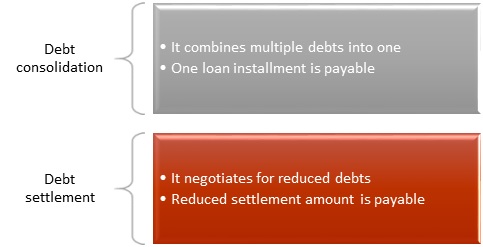
Debt consolidation loans are always useful in situations with multiple obligations. However, this is affected by how many obligations there are and how urgent it is to manage your debts. If your obligations are of very high interest and managing them is impossible, then debt settlement is the obvious option.
Otherwise, under normal conditions, debt consolidation loans in the UK are the most effective and practical solution. Therefore, before choosing these loans, you have to scrutinise your financial circumstances. Accordingly, you can decide whether debt consolidation is suitable for you.
What are debt consolidation loans?
Debt consolidation loans are specialised borrowing solutions. They are specifically designed to merge multiple debts into one loan. This aims to consolidate the debts and help borrowers simplify their monthly repayments at a lower rate.
How do debt consolidation loans work?
When there are multiple loans or credit accounts, borrowers have to pay multiple instalments. At the same time, they also have to manage multiple lenders and their interest rates.
All this is overwhelming for a limited monthly income. In such a situation, all loan accounts are merged through debt consolidation loans. Types of debts included are credit cards, personal loans, and overdrafts. The borrower has to pay only one loan instalment.
The payment of the remaining loans is done through debt consolidation borrowing. One aim of this is also that debt consolidation loans integrate your obligations at a lower interest rate than the interest rate you were paying on all the loans overall.
When does consolidating debts make sense?
You should consider this option in the following debt conditions.
- You have multiple instalments to manage
The primary aim of debt consolidation is to remove multiple instalments and facilitate just one loan instalment. So if you are making repayments on different loans, in such a case one loan instalment will help simplify your finances considerably.
- Existing debts are expensive
After merging all the debts, if the cost of your total debt obligation can be reduced, then debt consolidation is a practical solution. Therefore, at the time of loan processing, lenders check whether your total loan cost is lower than the total cost of your existing obligations or not. Only then is debt consolidation beneficial.
- You want a structured repayment plan
Obviously, when you are managing many repayments, it’s very difficult to monitor all repayment dates, manage multiple lenders, and pay repayments at varied rates of interest. With just one instalment, you do not have to remember different repayment dates. You can even repay one instalment on time through auto-debit.
- You can afford the new repayments
At the time of affordability assessment, you get to know whether you can repay the new loan instalment or not. If your debt consolidation loan instalment is more affordable in comparison to the total instalment of all your other loans, then you should definitely go for it. It actually makes sense to avail funds only if you can afford the repayments.
- You want to improve your credit score
Credit score improvement is also an important aspect. Due to multiple obligations, missing or delaying repayments is common. In such a case, it directly affects your credit score. Therefore, consolidate and downsize your debts.
Paying one instalment instead of multiple instalments is easier. This improves your credit score quickly. Otherwise, you may stay in a debt trap for a very long time. This can also affect your future loan approval chances.
What precautions should you follow after debt consolidation?
- Avoid repetitive use – Never use debt consolidation loans repeatedly. This is a debt management solution. Therefore, if you repeatedly avail funds through debt consolidation loans, it hurts your credit report.
- Check your affordability – Do not borrow if you cannot afford the repayments. A loan calculator or a free loan quote can tell you that. Therefore, once you merge your obligations, make sure you repay on time.
- Make a repayment budget – Before you even consolidate debts, make a repayment budget as per your current financial ability. You know your monthly income, debts and expenses. This means you can understand how much you can afford to repay. Make a repayment plan and mention it in the loan application; it helps improve approval chances.
Therefore, you can say that…
It is clear that debt consolidation loans are a significant solution in many circumstances. They help handle the debt burden through unsecured loans without collateral from a direct lender. It is important to scrutinise your personal finances and attain the best outcome from them.
From next time, borrow funds only for urgent needs. Pay off existing debts as soon as possible through part payment or prepayment. That is the best way to manage your obligations.
FAQs
1. Can I consolidate debts with different lenders into one loan?
- Answer: Typically, it is not common practice. Choose one lender with the most affordable repayment plan.
2. Does debt consolidation stop interest immediately?
- Answer: Yes, the interest stops, but on the merged loans. But you have to pay interest as a vital part of the debt consolidation loan instalment.
3. What is the tenure of debt consolidation loans?
- Answer: It is usually between 3 to 7 years. But the shorter the tenure, the lower the total cost of borrowing. You should try to get a shorter tenure. Monthly instalments can be big, but you do not end up paying a higher total cost.

Sarah Jones is a seasoned financial writer with over a decade of experience covering personal finance loans, and dedicated to provide the best lending solutions to the clients. Known for translating complex financial topics into accessible insights, Sarah contributes to leading loan providers like Arbitrageloans and contributes to the company’s growth via professional writing and loan guidance. She holds a degree in economics and is passionate about helping aspirants with tools to make informed loan decisions. She also loves to explore the world and its natural beauty. Sarah believes financial literacy is the base of legitimate lending and borrowing. She strives to make it understandable for all.